BPC-157 and TB-500: The Wolverine Stack, Explained by the Evidence
Search any peptide forum for injury recovery and you’ll meet the same pairing within minutes: BPC-157 plus TB-500, nicknamed the “wolverine stack” after the comic-book character who heals from anything. It is probably the most-purchased peptide combination on the research market, and almost everything written about it is by clinics selling it. This guide covers what each compound actually is, why they get combined, what the evidence record actually shows, and the label-accuracy problem nobody selling the stack mentions.
The two compounds, side by side
| BPC-157 | TB-500 | |
|---|---|---|
| What it is | Synthetic 15-amino-acid fragment derived from a protective protein in gastric juice | Synthetic peptide based on thymosin beta-4, a naturally occurring repair-associated protein |
| Proposed mechanism | Studied in animals for tendon, ligament, muscle, and gut healing | Regulates actin (cell structure/migration); animal studies report wound-healing effects |
| Human trial evidence | Essentially absent | Lacking for the recovery claims made in forums |
| Approved medical use | None, anywhere | None, anywhere |
| WADA status | Prohibited | Prohibited |
Full compound profiles: the BPC-157 hub and TB-500 hub.
Why do people stack BPC-157 and TB-500?
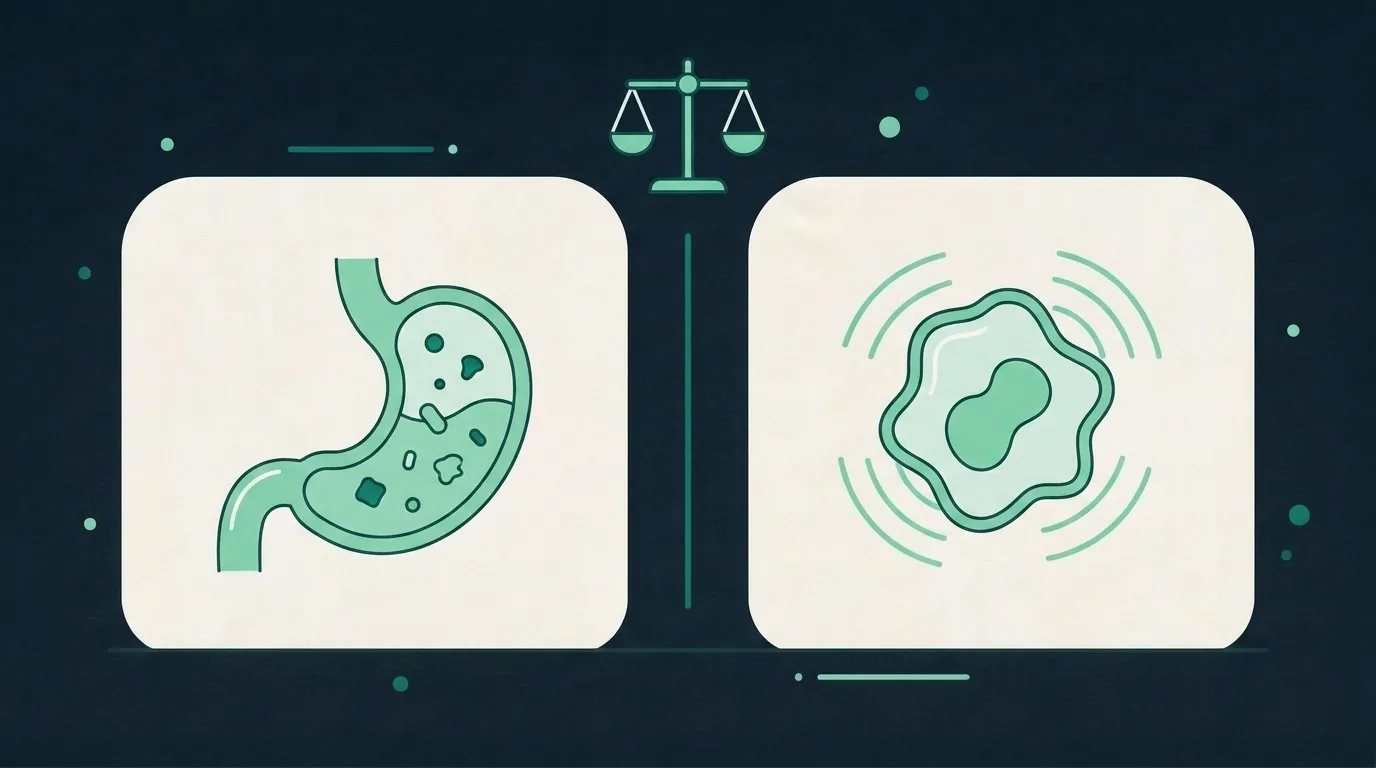
The stacking logic is mechanistic, not clinical: BPC-157’s animal literature centers on localized soft-tissue and gut effects, while thymosin beta-4 biology is more systemic, so the forum theory goes that they cover different parts of the healing process. It is a plausible-sounding story. It has never been tested as a combination in a controlled human trial, and neither compound alone has meaningful human trial evidence for injury recovery. “Two promising animal literatures, zero human stack data” is the honest summary.
What the evidence record actually contains
BPC-157’s studies are overwhelmingly preclinical (rodent models of tendon, ligament, and gut injury, much of it from a single research group), a gap that published medical reviews keep flagging. Thymosin beta-4 has a genuine cell-biology literature and animal wound-healing studies; TB-500, its research-market derivative, is best known publicly not from medicine but from doping cases, including in professional and equine sport. None of this means the compounds do nothing. It means every confident recovery claim you read is running far ahead of the human data.
The questions every buyer asks
Can you mix them in one vial?
You will find clinics claiming the two must never share a vial (one ranking article attributes this to “incompatible pH”) and forums full of people mixing them in one syringe for years. Here is the data-first answer: no published compatibility study exists either way. Anyone stating it definitively, in either direction, is asserting, not citing. What is verifiable: reconstituting and storing them separately removes the question entirely.
What about dosing?
There are no human trial protocols for either compound. Every dosing chart you see is forum convention rather than clinical data. We won’t invent numbers where none exist. What we can give you is the math: whatever protocol your research follows, the peptide calculator converts vial size, water, and dose into exact syringe units.
Is the stack safe?
Unknown in humans. That is what “no human trials” means. Reported side effects are anecdotal, and the bigger measurable risk sits in the vial itself, which brings us to the part the clinics skip.
The label-accuracy problem
Both compounds are gray-market products, and gray-market labels often miss: failed results turn up regularly in Janoshik’s public results database. Stacking compounds doubles your exposure: two vials, two chances of an underdosed or mislabeled product. Before buying either half of the stack, check the vendor’s published, batch-specific third-party results on the PeptideCensus vendor index. Every score links to its source, and listing is free and un-buyable, so the ranking has no reason to flatter anyone.
For tested athletes: a hard no
Both halves of the wolverine stack are prohibited under WADA rules, and BPC-157 has been the subject of specific athlete warnings after appearing in supplements. For anyone subject to doping control, this stack is a positive test waiting to happen regardless of what the label says or doesn’t say.
Common questions
What is the wolverine stack?
The forum nickname for combining BPC-157 and TB-500, two unapproved research peptides with animal-study healing literatures.
Which is better, BPC-157 or TB-500?
They are different molecules with different proposed mechanisms and equally thin human evidence; “better” has no data behind it. The comparison table above is the current state of knowledge.
How long do people run the stack?
Forum conventions vary wildly, and none are backed by trial data. That variability is itself the answer: nobody knows the right duration because it has never been studied in humans.
Where can I buy BPC-157 and TB-500 safely?
“Safely” in an unregulated market means verifiably: vendors with recent, batch-specific, published third-party results for both compounds. Start from the vendor rankings and apply the same five checks we use for every compound.
This article summarizes published research and public testing data for informational purposes. It is not medical advice; research compounds are not for human use, and if you buy through a link on this site we may earn a commission; commissions never influence scores or rankings.
PeptideCensus Editorial is the research team behind the independent peptide lab-result index. Every article is built from published third-party data - trial publications, lab reports, and regulatory records - with every number linked to its source. We don't test, we don't sell, and commissions never touch scores or rankings.
About PeptideCensus →